
Do US Military Deployments Reduce Sanctions Busting?
Our recent publication in Foreign Policy Analysis examines this question


We are excited to share a new article recently published in Foreign Policy Analysis: “With Friends Like These: The Impact of US Troop Deployments on Economic Sanctions Busting.”
Our article asks a simple question: Does security cooperation lead to greater compliance with US sanctions regimes?
We came to this question because of Charmaine Willis’ research on basing and our observation that with US troops practically everywhere (see below), do they have an effect on sanctions busting, specifically sanctions busting trade? Our analysis examines whether countries that host US troops are less likely to engage in trade-based sanctions busting. We explore this dynamic by looking at the propensity of sanctions busting trade followed by a second-stage that looks at the magnitude of trade-based busting (in USD).
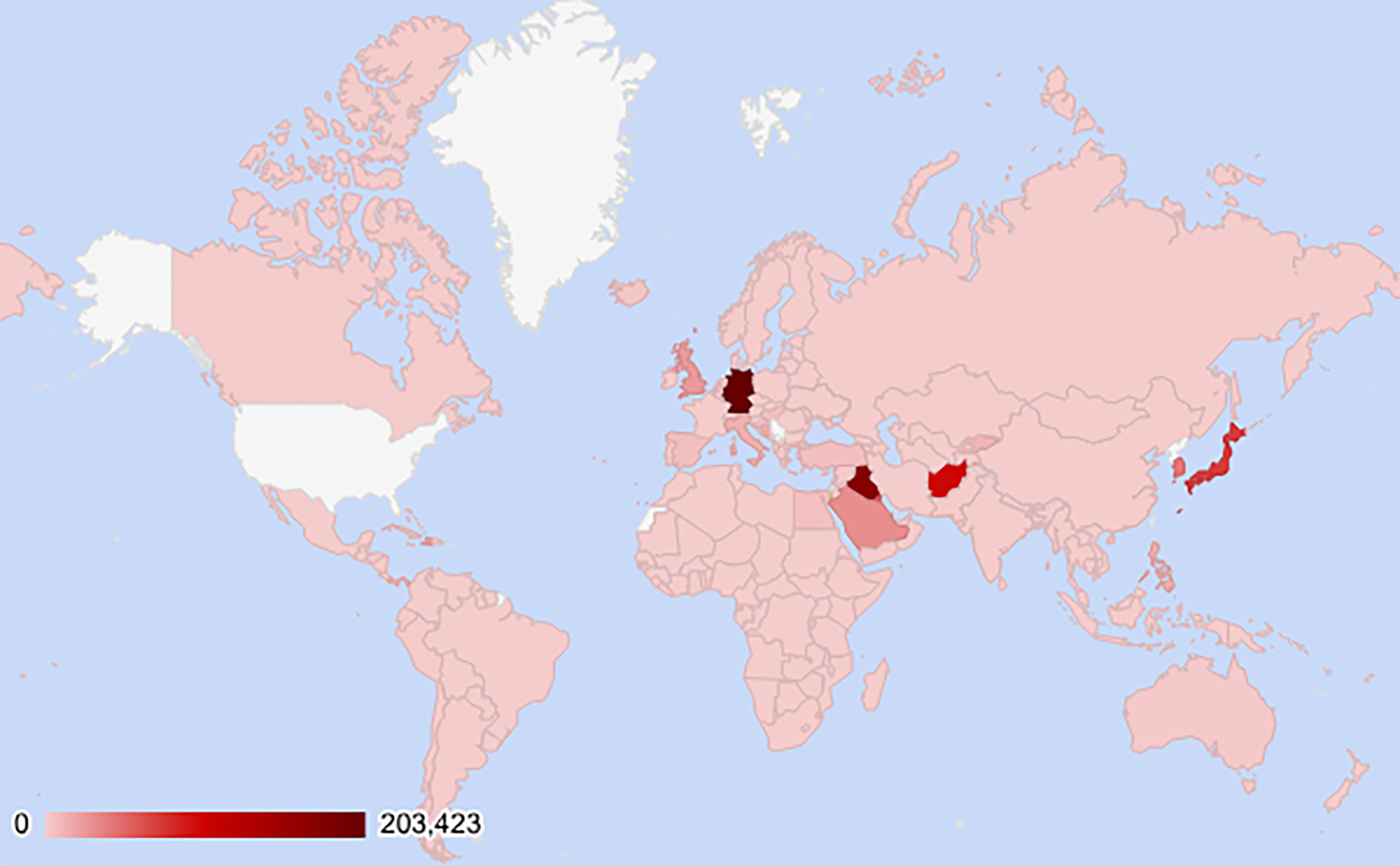
Figure shows the distribution of average troop levels from 1990-2018 using Google Sheets Map Tool and data from the troopdata package in R.
Our answer to the question we pose above is that it depends. Using data from the Global Sanctions Database, we developed a data set of sanctions busting events and the magnitude of sanctions busting trade that third-party states conducted against U.S. economic sanctions that they were not a party to. Replication materials should be available soon on Harvard Dataverse.
US military deployments do not automatically deter sanctions busting. Larger and longer-term troop deployments reduce both the likelihood and volume of sanctions-busting trade but only when those deployments are embedded in formal defense pacts. In the absence of those institutional commitments, troop presence alone does little to constrain sanctions-busting behavior and may even coincide with more of it. Simply plopping US troops in a state where no defense pact exists doesn’t have the same vibe as plopping those same troops in a state where there is a defense pact.
We think that this matters because alliances are not just military arrangements. They can shape cooperation across other areas of foreign policy, including economic statecraft. Our findings, though, also show the limits of US influence and that military presence by itself is not enough.
If you’re interested in sanctions, alliances, US basing, or the politics of economic statecraft, we hope you’ll give it a read.