
The international agreement that wasn’t
The failure of the JCPOA and now all-out war


In 2015, the United States along with the European Union, China, Russia, and Iran signed the Joint Comprehensive Plan of Action (JCPOA). The JCPOA was an agreement that limited Iran’s nuclear enrichment in exchange for sanctions relief. The agreement, which began under E3 – United Kingdom, France, and Germany – auspices, was the first time in decades that US and Iranian diplomats and negotiators worked to address security concerns related to Iran’s nuclear ambitions and weapons of mass destruction (WMD) development.
During now President Trump’s first campaign for the White House in 2015, he ridiculed the agreement and vowed to cancel it should he defeat Hillary Clinton (which he did). In 2018, nearly 16 months after assuming the presidency, President Trump withdrew from the agreement and reimposed a myriad of punishing economic sanctions on Iran, what the White House dubbed a “maximum pressure” campaign. While the agreement remained “intact” due to the commitment of the other signatories, the US withdrawal from the agreement undermined its legitimacy.
The European Union attempted a number of initiatives to save the agreement and even developed a tool to deter and counteract US economic sanctions, a special purpose vehicle known as the Instrument in Support of Trade Exchanges (INSTEX). INSTEX, which never really developed, was meant to help facilitate trade with Iran without the need for cross-border payments, thus remaining technically compliant with US economic sanctions and neutering one of the US’ most powerful tools of economic statecraft, financial sanctions. However, the EU was unwilling to test the US’ resolve, and Iranian distrust of the mechanism meant that only a single transaction of humanitarian goods, namely medical supplies, was carried out.
The second Trump Administration sought to revise the JCPOA and renew negotiations with Iran on the status of its nuclear program. While negotiations were set to commence in June 2025, Israeli bombardment of Iranian nuclear facilities and attacks on Tehran scuttled the resuscitation of the deal.
We believe that the current conflict and war with Iran (with no end in sight even if the Trump Administration had ordered a cease fire), which follows the US’ own participation in June - which involved dropping punishing bunker buster bombs on underground Iranian nuclear facilities, could have been avoided had the US remained in the original JCPOA.
We highlight three failures in US foreign policy that might have prevented the current situation.
Revision without withdrawal
Most international agreements can be revised, and the Trump Administration (and Biden Administration) could have worked to address any misgiving with the final deal while remaining a party to its provisions. The JCPOA might have been the best possible outcome for the West in halting Iran’s nuclear ambitions, and the JCPOA did far more from the West than it did for Iran.
US withdrawal of the deal created a number of issues. First, it complicated future US administrations from rejoining the deal given Congressional animosity toward normalizing relations with Iran. When the original deal was negotiated by the Obama Administration, Republicans in Congress sought to convince Iranian leaders to walk away from the agreement by indicating that it applied only to the current administration and not to a future (Republican) president. Despite Congressional interference, the Obama Administration managed to complete the deal. Second, US relations with Russia and China are even more complicated today than a decade ago. Russia has since invaded Ukraine, and the US and China have been locked in a trade war and ongoing trade disputes with the resurgence of tariffs and tit-for-tat economic retaliation. Recent Chinese activation of its blocking statutes in response to the US’ Iran sanctions reflect a growing unease with the exercise of US (economic) power.
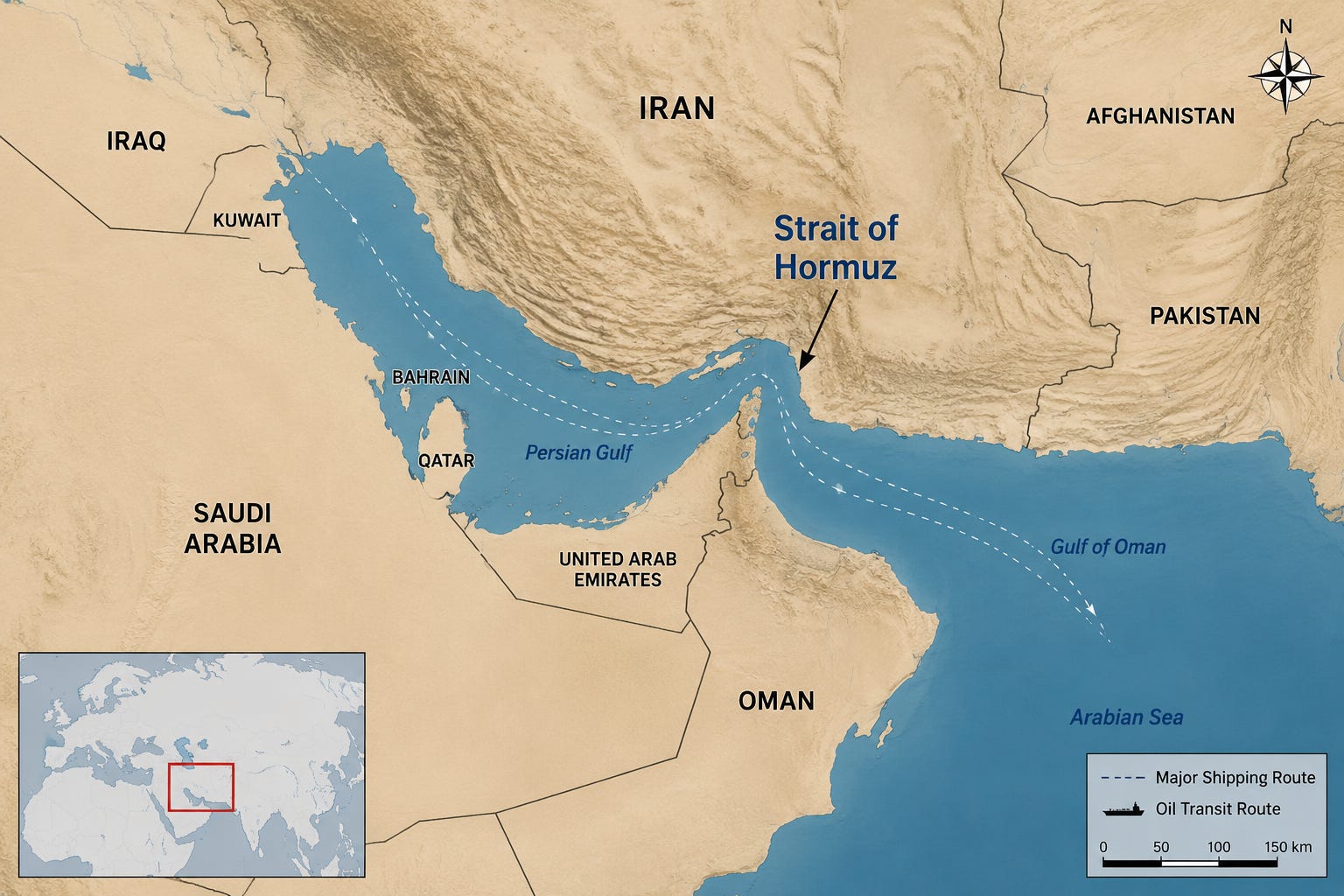
It is unlikely that agreement on a new deal or Russian and Chinese support will be forthcoming given the state of relations between the parties involved. Lastly, US withdrawal from the JCPOA provided the pretext necessary for Israel to launch attacks on Iran in June 2025 and the pretext for the current war in Iran that has since closed the Strait of Hormuz.
If the US had remained a party to the deal, Israel may not have bombed Iranian targets and cities given the US’ commitment to following through on the deal.
Credible commitments no more
The JCPOA is likely finished, and any future agreement - should some miracles take place - will be markedly challenging to complete. The Iranians have little incentive to remain a party to any new agreement, and the war in Iran that has culminated in US and Israeli bombardment of Iranian cities, a destruction of the Iranian navy and air force, and heated rhetoric by Iran, Israel, and the US have likely closed the door to revisions to the current JCPOA or a new agreement.
US support for 2025 Israeli bombardments under the pretext of Israeli self-defense may undermine the entire proliferation regime which consists not only of the JCPOA, but the Nuclear Nonproliferation Treaty (NPT) as well as the Treaty on the Prohibition of Nuclear Weapons (TPNW). Why join such regimes if, in the end, your state ends up a target of US or its allies’ military strikes? The US support for the Iran bombing may do more to damage the proliferation regime than a single state like Iran could do withdrawing from the agreement. The United States may have inadvertently sent a signal to other states that the US’ signature and agreement on international treaties and agreements is meaningless.
A larger regional war and retaliation
While Iran’s network of proxies and allies has been severely weakened by Israeli efforts to dismantle groups affiliated with Iran (Hamas, Hezbollah, and the Houthi), Israeli efforts to eliminate Iran’s nuclear capabilities may embolden Iran’s proxies. Groups aligned with Iran may target US interests in the Persian Gulf and the larger region. Also, the US mainland may once again be a target for retaliation by terrorist groups. Furthermore, US bombing activities may poison public opinion of states in the Persian Gulf against the United States and complicate US relations with states in the region, as well.
While President Trump campaigned on ending forever wars by the US military, the United States now finds itself drawn into an asymmetrical conflict with Iran. The inability of the US to reopen the Strait of Hormuz or even guarantee the safety of tanker traffic through the narrow strait likely reflects the challenges the US faces in wielding instruments of power, especially economic ones, against resolute targets like Iran.
The United States and Israel may become drawn into conflicts in cyberspace, and US infrastructure and companies may become unwitting targets of Iranian cyber-operations as Iran attempts to defend itself from US and Israel kinetic attacks on its territory. Cyber attacks by Iran may embolden other hacking groups and hacker states, like North Korea and Russia, which could potential disrupt the US economy. Yet prior attacks by Iranian linked cyber operatives had demonstrated that US infrastructure and companies may be unprepared for a more coordinated assault.